Wireless POS Terminal Market to Reach USD 29.19 Billion by 2034 as Contactless Payments and Smart Retail Technologies Accelerate Growth
Global Wireless POS Terminal Market to Grow at 9.8% CAGR, Driven by Mobile Payment Adoption, Smart POS Innovation, Retail Digitalization and Expanding Hospitality Applications
the global Wireless POS Terminal Market is entering a significant growth phase as businesses adopt contactless payments, mobile transaction technologies and connected retail infrastructure. According to Maximize Market Research, the market was valued at USD 12.58 billion in 2025 and is projected to reach USD 29.19 billion by 2034, registering a compound annual growth rate (CAGR) of 9.8% from 2026 to 2034.
The market outlook reflects changing consumer payment preferences, increasing merchant demand for operational flexibility and the integration of payment acceptance with broader business management systems. Retailers, restaurants, hotels, healthcare providers and transportation operators are adopting wireless payment terminals to improve transaction convenience and reduce dependence on fixed checkout infrastructure.
As digital commerce becomes increasingly connected, wireless POS technology is evolving beyond payment processing into integrated solutions supporting inventory management, customer engagement and operational analytics. This transition creates new opportunities for terminal manufacturers, payment technology providers, financial institutions and software developers.
𝐃𝐨𝐰𝐧𝐥𝐨𝐚𝐝 𝐏𝐃𝐅 𝐁𝐫𝐨𝐜𝐡𝐮𝐫𝐞 @
https://www.maximizemarketresearch.com/request-sample/1967/
Wireless POS Terminal Market Overview: Payment Infrastructure Becomes a Business Growth Platform
Wireless point-of-sale terminals are electronic devices that enable merchants to accept payments through wireless communication networks. These systems commonly incorporate card-reading capabilities, secure payment authentication, display interfaces and connectivity for transaction authorization.
Unlike traditional fixed checkout equipment, wireless terminals allow businesses to process payments across sales floors, restaurant tables, outdoor venues and mobile service locations.
The market includes payment hardware as well as supporting software and services. Modern systems may integrate transaction processing with product information, inventory records, customer loyalty programs and operational reporting.
Growing demand for flexible checkout environments is encouraging businesses to reconsider how payments fit into customer service.
Retailers increasingly view POS technology as a business management investment rather than a standalone transaction device. Equipment reliability, security, software compatibility and long-term operating costs are becoming essential purchasing considerations.
Contactless Payments Strengthen Wireless POS Terminal Market Demand
Increasing adoption of cashless and contactless payments remains a primary driver of the Wireless POS Terminal Market.
Consumers increasingly expect convenient payment options, including contactless cards, digital wallets and mobile payment applications.
Businesses must therefore maintain payment infrastructure capable of supporting different transaction methods without creating unnecessary checkout delays.
Wireless terminals offer operational flexibility by allowing employees to complete transactions away from conventional payment counters.
This capability is valuable in restaurants, retail stores, hospitality environments and service businesses where payment mobility can improve customer convenience.
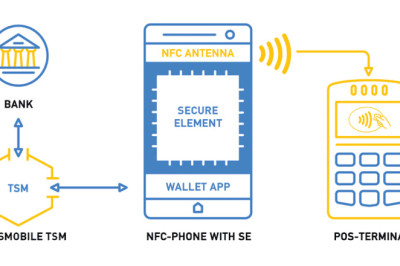
The expanding use of digital payments also strengthens demand for terminals compatible with near-field communication technology and secure card authentication.
For merchants, purchasing decisions increasingly depend on transaction reliability, payment acceptance capabilities, processing costs and integration with existing business systems.
Mobile POS Solutions Lead Technology Adoption
Based on type, the Wireless POS Terminal Market includes Portable Countertop and PIN Pad, Mobile POS (mPOS), Smart POS and Other Types.
The mPOS segment is expected to dominate the market by 2034, registering a projected CAGR of 9.7% during the forecast period.
Mobile POS solutions enable merchants to accept payments using portable terminals, smartphones or tablets connected to compatible payment-processing technology.
These systems support businesses that require flexible sales operations without extensive fixed checkout infrastructure.
Growing smartphone penetration, increasing availability of digital payment services and adoption among small merchants contribute to demand.
mPOS technology is particularly relevant for restaurants, delivery services, temporary retail locations and mobile businesses.
For solution providers, opportunities include affordable terminals, simplified merchant onboarding and integration with cloud-based business applications.
Smart POS Terminals Transform Retail Operations
Smart POS terminals are becoming important tools for businesses seeking integrated payment and operational management capabilities.
These devices can combine payment acceptance with software applications supporting inventory monitoring, customer engagement, reporting and employee workflows.
Retailers can use connected terminals to access product information, manage discounts and coordinate transactions across different locations.
Advanced Android-based payment platforms also provide opportunities for software developers to introduce specialized merchant applications.
The convergence of hardware and business software creates demand for terminals capable of supporting evolving operational requirements.
However, merchants should evaluate software support, system compatibility, processing arrangements and data security before selecting equipment.
Technology suppliers that provide reliable hardware alongside adaptable software ecosystems may strengthen their competitive position.
Retail Industry Dominates Wireless POS Terminal Applications
Retail represents the largest industry segment within the Wireless POS Terminal Market.
Supermarkets, department stores, specialty retailers and other commercial establishments require efficient transaction processing and coordinated inventory management.
Wireless POS solutions allow employees to process payments across different areas of a store, potentially reducing reliance on centralized checkout counters.
Integration with inventory systems can also improve access to product pricing and stock information.
Retailers increasingly seek solutions that connect physical transactions with digital customer engagement and business reporting.
For large retail chains, system scalability and centralized management remain important requirements.
Smaller merchants may prioritize affordability, ease of installation and the ability to accept multiple payment methods.
These different purchasing priorities create opportunities for providers serving distinct retail customer segments.
Hospitality Industry Emerges as a Major Growth Opportunity
The hospitality industry held the second-largest market position after retail in 2025.
Restaurants, hotels, resorts, event venues and food service businesses increasingly adopt wireless payment terminals to improve transaction convenience.
Handheld devices allow restaurant employees to accept payments at tables, reducing the need for customers to visit fixed checkout counters.
Integrated platforms can also support ordering, billing and customer service workflows.
Hotels and resorts require flexible payment infrastructure across restaurants, reception areas and other guest service locations.
The growing use of tablet-based restaurant management systems creates opportunities for connected payment solutions.
Hospitality operators evaluating terminal investments should consider staff training, network coverage, payment reliability and integration with existing management applications.
Hardware and POS Software Services Support Market Expansion
By component, the market is divided into Hardware and POS Software and Services.
Hardware includes payment terminals, portable card readers, PIN pads and supporting equipment used in merchant transactions.
Demand is influenced by terminal replacement, expansion of merchant acceptance networks and adoption of modern payment technologies.
Software supports transaction management, product information, reporting and integration with business applications.
Services include implementation, technical support, maintenance and related payment infrastructure requirements.
The increasing sophistication of merchant operations creates opportunities for vendors offering integrated hardware and software solutions.
Businesses increasingly evaluate total ownership costs, including equipment expenditure, software subscriptions, transaction fees and ongoing support.
For technology providers, recurring software and service relationships can complement equipment sales and support long-term customer engagement.
Cloud Connectivity Improves Business Visibility
Cloud-connected POS technology is changing how merchants manage transactions and operational information.
Businesses operating multiple locations often require centralized access to sales records, inventory information and performance reports.
Cloud-enabled systems can make relevant operational information available to authorized managers across different locations.
This capability supports business planning and reduces dependence on individual store-level reporting systems.
Connected platforms may also integrate payment information with accounting applications and customer management software.
However, successful adoption depends on reliable network connectivity, appropriate access controls and compatibility with existing applications.
Merchants should evaluate cloud integration according to practical business requirements rather than software features alone.
Payment Security Remains a Critical Market Challenge
Cybersecurity and payment fraud remain important considerations for wireless POS terminal adoption.
Payment infrastructure processes sensitive transaction information and must maintain appropriate security controls.
Risks may involve compromised devices, unauthorized access, insecure configurations and fraudulent transaction activity.
Merchants and technology providers must consider secure authentication, software maintenance, encryption and applicable payment security requirements.
The growth of connected payment systems also increases the importance of managing device access and monitoring unusual activity.
Security requirements can influence equipment costs and implementation complexity.
Businesses should evaluate payment providers according to security capabilities, technical support and operational reliability.
Vendors that combine convenient payment experiences with effective protection mechanisms can strengthen merchant confidence.
Healthcare and Transportation Create Additional Applications
Beyond retail and hospitality, healthcare and transportation represent important wireless POS terminal applications.
Healthcare providers can use portable payment terminals for billing activities across selected service environments.
These systems may help reduce administrative inconvenience when patients access different departments or services.
Transportation operators require flexible payment capabilities for ticketing, passenger services and mobile transactions.
Sports and entertainment venues also benefit from mobile payment acceptance at concessions, temporary sales points and event locations.
Each industry presents different requirements involving transaction volume, connectivity, portability and operational integration.
Payment technology providers can address these needs through specialized terminal configurations and industry-specific software.
Asia Pacific Presents Strong Regional Growth Opportunities
Asia Pacific is expected to experience strong growth in the Wireless POS Terminal Market through 2034.
Increasing digital payment adoption, expanding retail operations and growing demand for mobile POS systems support regional opportunities.
China, India, Japan, South Korea and Southeast Asian economies represent important markets for payment infrastructure development.
Hospitality businesses across the region are increasingly adopting modern POS systems to support convenient customer transactions.
The presence of substantial small-business and micro-merchant populations also creates opportunities for affordable mobile payment solutions.
Financial institutions and payment providers can support adoption through merchant onboarding, accessible technology and competitive transaction services.
Regional success depends on compatibility with local payment systems, regulatory conditions and merchant requirements.
North America Benefits from Mobile Payment Adoption
North America represents an important market for wireless POS terminals, supported by established digital payment infrastructure and widespread smartphone usage.
Businesses across the United States and Canada increasingly offer multiple payment options to address changing customer preferences.
Retailers and hospitality operators are evaluating mobile terminals as part of broader technology modernization strategies.
Digital wallet acceptance and integrated payment applications contribute to demand for adaptable transaction infrastructure.
The region also provides opportunities for replacing older equipment with connected smart terminals.
Merchants increasingly prioritize reliable transaction performance, software integration and centralized business management.
Technology providers offering secure, scalable and easy-to-maintain solutions can address these requirements.
Europe Strengthens Contactless Payment Infrastructure
Europe remains an important market for wireless payment technology because of established card payment networks and growing contactless transaction adoption.
Businesses across Germany, France, the United Kingdom, Italy and Spain require payment solutions suitable for different retail and service environments.
The modernization of checkout infrastructure creates opportunities for portable terminals and integrated merchant software.
Payment security, regulatory compliance and customer authentication remain important purchasing considerations.
Hospitality businesses and smaller merchants may benefit from terminals offering mobility and simplified administration.
Providers seeking European expansion should consider country-specific payment preferences, acquiring arrangements and integration requirements.
Middle East, Africa and South America Offer Emerging Opportunities
The Middle East and Africa present growth opportunities as financial institutions and merchants expand electronic payment acceptance.
Retail modernization, tourism activity and development of digital financial services can support demand for wireless POS equipment.
South America also offers opportunities through increasing merchant adoption of digital payment infrastructure.
Brazil, Argentina and other regional economies represent markets where payment technology providers can address diverse business requirements.
Small merchants may prioritize low-cost devices and flexible transaction services.
Larger businesses may require centralized reporting, multiple-terminal management and integration with enterprise software.
Regional market development will depend on payment infrastructure availability, implementation costs and merchant access to financial services.
Recent Industry Developments Highlight Smart Payment Innovation
The Wireless POS Terminal Market is experiencing technology development focused on connected payment devices and integrated merchant applications.
In January 2026, Ingenico introduced its AXIUM CX9000 smart POS terminal, incorporating advanced retail applications and cloud-based payment management.
In April 2026, Toast introduced its Toast Go 3 handheld POS device across selected international markets, supporting payment mobility in restaurant operations.
During the same month, Elavon collaborated with xnPOS and Castles Technology on an integrated mobile payment solution for hospitality applications.
In September 2025, PAX Global Technology partnered with Payroc to introduce BroadPOS for independent software vendors in the United States.
These developments illustrate growing industry attention toward intelligent terminals, integrated software and flexible payment acceptance.
Competitive Landscape: Technology Providers Focus on Connected Payment Solutions
The Wireless POS Terminal Market includes established payment equipment manufacturers, merchant technology companies and financial service providers.
Major companies covered in the market research include Verifone, PAX Global Technology, Ingenico, First Data, Diebold Nixdorf, NCR Corporation, Elavon, Winpos, BBPOS, Bitel, Squirrel Systems, Cegid Group, Citixsys Americas and Newland Payment Technology.
Competition is influenced by equipment reliability, security capabilities, software integration, payment compatibility and merchant support.
Manufacturers increasingly develop terminals that combine transaction processing with business applications.
Software providers can differentiate their offerings through industry-specific functionality and simplified merchant integration.
Businesses selecting payment platforms should compare overall operating economics rather than relying solely on terminal purchase prices.
Future Business Outlook: Wireless POS Becomes Essential to Digital Commerce
The Wireless POS Terminal Market is expected to benefit from increasing payment digitalization and demand for flexible merchant operations.
Businesses should evaluate terminal investments according to transaction requirements, customer convenience, security and long-term operating costs.
Retailers may prioritize omnichannel integration and inventory visibility, while hospitality operators require mobile payment acceptance and coordinated service workflows.
Technology manufacturers can strengthen their market position through reliable hardware, adaptable software platforms and responsive technical support.
Financial institutions and payment service providers have opportunities to expand merchant acceptance through accessible onboarding and integrated payment solutions.
The projected expansion from USD 12.58 billion in 2025 to USD 29.19 billion by 2034 highlights the increasing commercial importance of connected payment infrastructure.
Companies that align payment technology with operational efficiency, customer experience and security requirements may be better positioned to compete in an increasingly digital commerce environment.
About Maximize Market Research
Maximize Market Research publishes sector forecasts, competitive analysis, and consulting insight for teams evaluating demand, competition, pricing, and growth strategy across high-value industries.
The company provides market intelligence and consulting services across information technology, fintech, telecommunications, retail, consumer industries, manufacturing, healthcare, energy and other major sectors.
Its research supports strategic investment evaluation, market entry planning, competitive benchmarking, business development and long-term growth decisions.
𝐃𝐨𝐰𝐧𝐥𝐨𝐚𝐝 𝐏𝐃𝐅 𝐁𝐫𝐨𝐜𝐡𝐮𝐫𝐞 @
https://www.maximizemarketresearch.com/market-report/wireless-pos-terminal-market/1967/
Contact Information
MAXIMIZE MARKET RESEARCH PVT. LTD.
2nd Floor, Navale IT Park Phase 3
Pune Banglore Highway, Narhe
Pune, Maharashtra 411041, India
Phone: +91 9607365656
Email: sales@maximizemarketresearch.com
Website: https://www.maximizemarketresearch.com/
Explore the Complete Wireless POS Terminal Market Report for Detailed Market Forecasts, Technology Segmentation, Competitive Intelligence and Regional Business Opportunities.